Other Projects

I Love to Create: A Painted Umbrella!

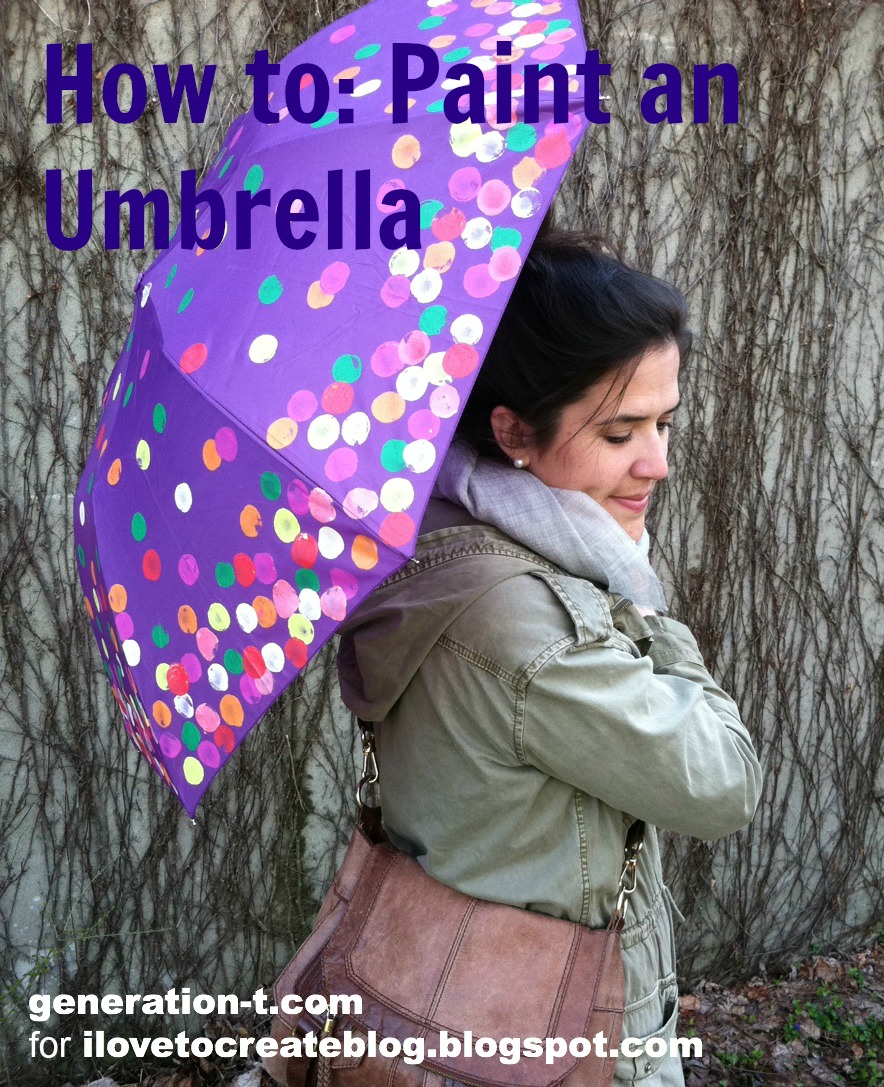
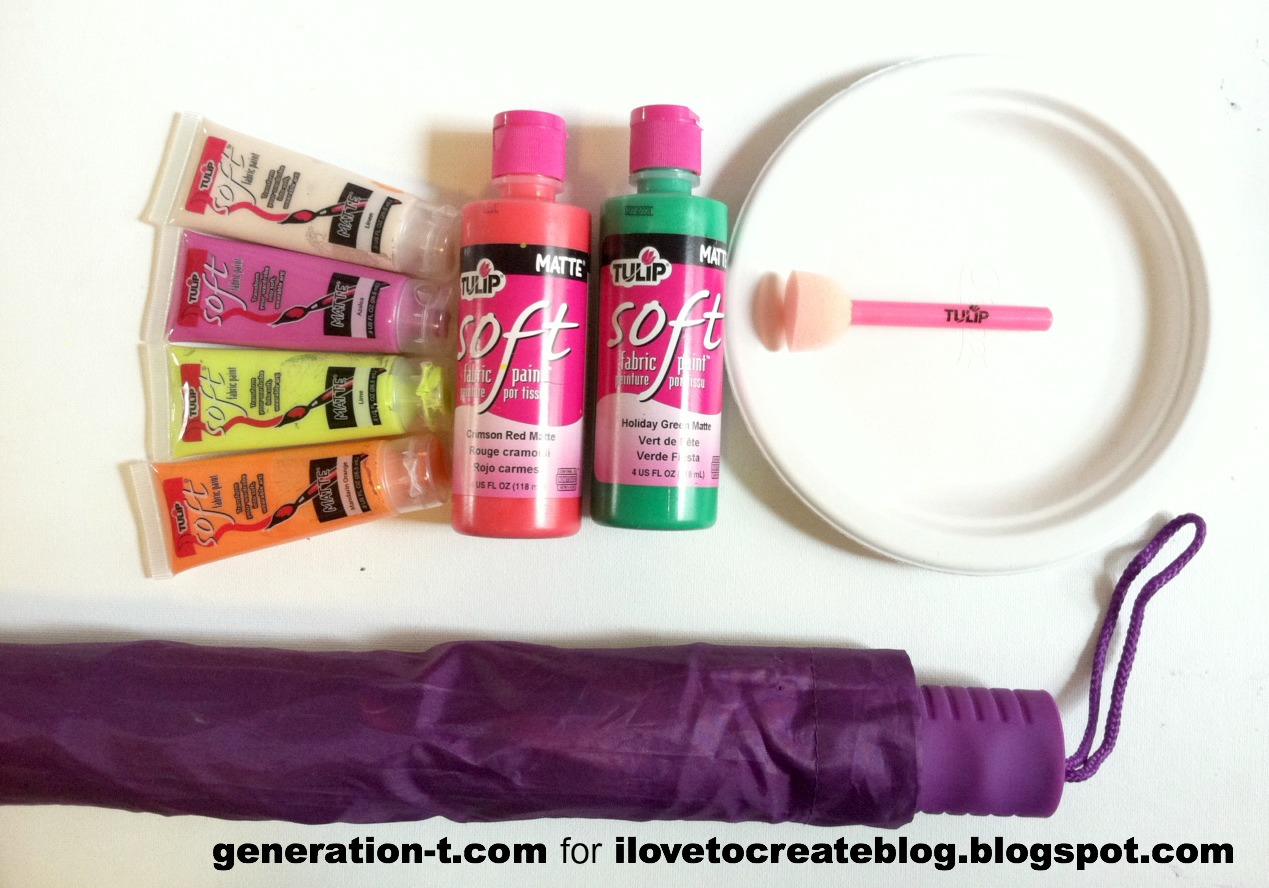
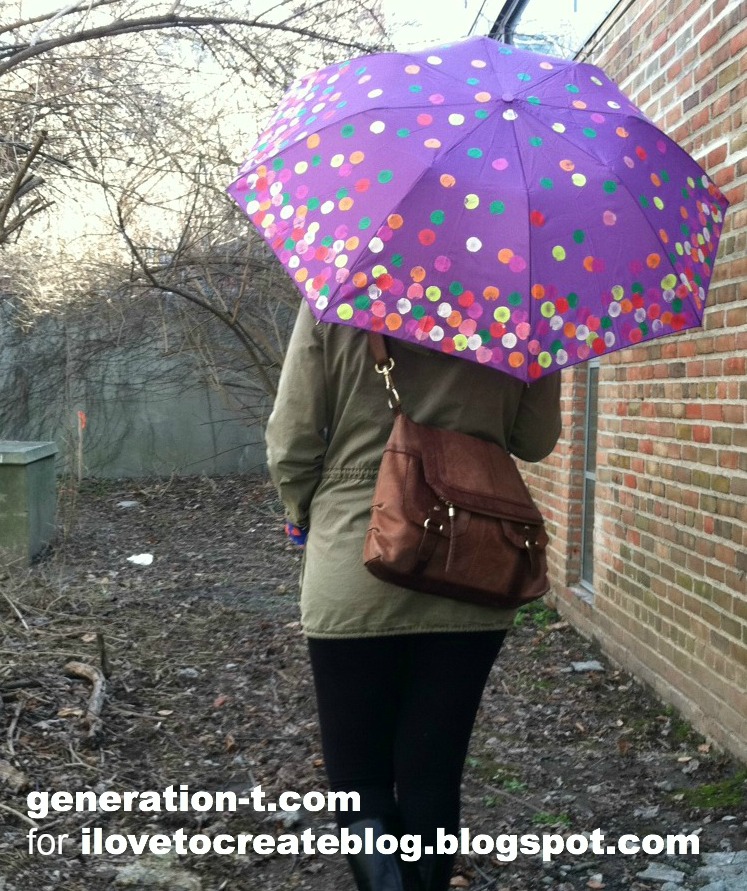
They say that April showers bring May flowers. And in some parts of the country this year there’ve even been April flurries to herald in the blooms! While Mother Nature keeps us on our toes, here’s a colorful springtime project that really brings the flowers when it rains. It’s just one of a slew of ways to decorate an umbrella with paint (because let’s face it, sometimes a purple umbrella isn’t quite bright enough). It’s part pop art (a gumball machine!), part impressionism (Monet’s gardens at Giverny) — and a whole lot of color to brighten any dreary day! We often think of fabric paints in the context of T-shirts and other wearables, but it’s fun to experiment with paint on other fabric-based surfaces: embellished pillows, couches, canvas director chairs, curtains, and…umbrellas!

What you need:
-plain umbrella
-
Tulip Soft Fabric Paint in a variety of colors (I used Azalea, Lime, Mandarin Orange, Linen, Crimson Red Matte, and Holiday Green Matte)
-Tulip Sponge Pouncers (foam paintbrush)
-paper plate (to use as a paint palette)

Make it:
Click through to the the iLoveToCreate Blog
to watch the how-to video I did for About.com, and follow the step-by-step photos.

What a nice vibrant splash of color while we wait for more flowers to poke through!

[ No Comments | Posted on April 23rd, 2013 ]

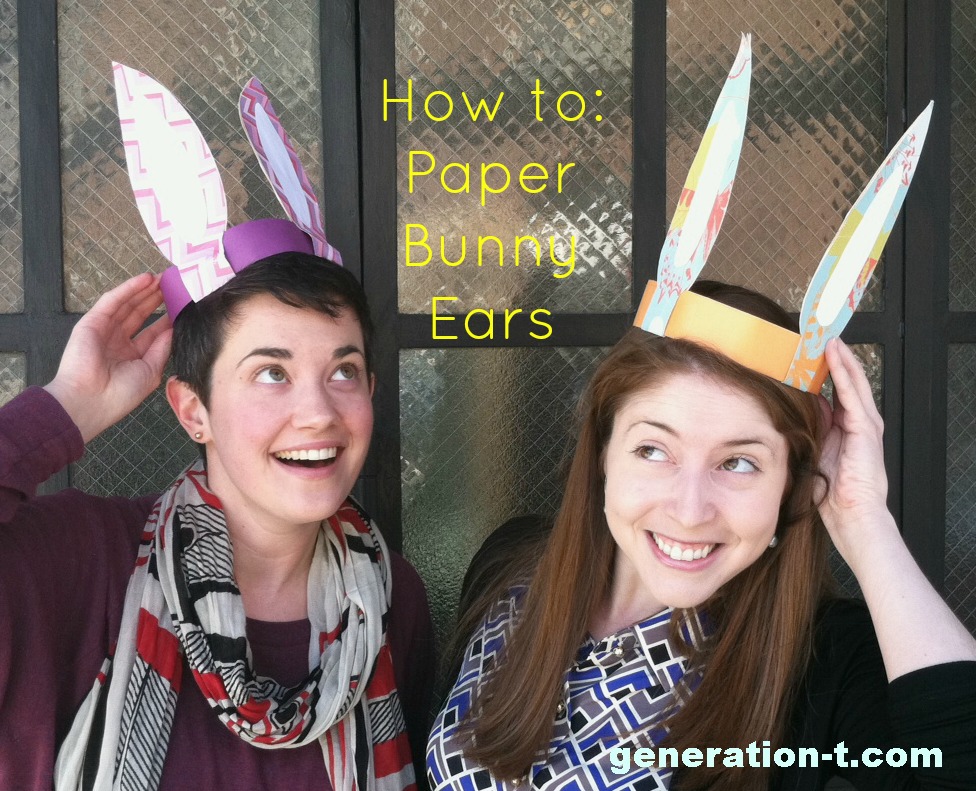
How to: Paper Bunny Ears!

Here’s one last Easter-themed tutorial before the weekend! And this how-to is egg-free (no more glitter, dye, or shaving cream). Best of all, the adjustable band means that both little and big kids can perch these bunny ears atop their heads!

Materials:
-Colored paper (for headband)
-Decorative paper (for ear exteriors; check your wrapping paper stash!)
-White paper (for ear interiors)
-File folder (as stiffener, for perky ears!)
-Tacky Dot Runner or glue stick
-Paper scissors
-Clear tape
-Pen or pencil

Make it:

Click below to follow along with the Paper Bunny Ears video tutorial I made for About.com!

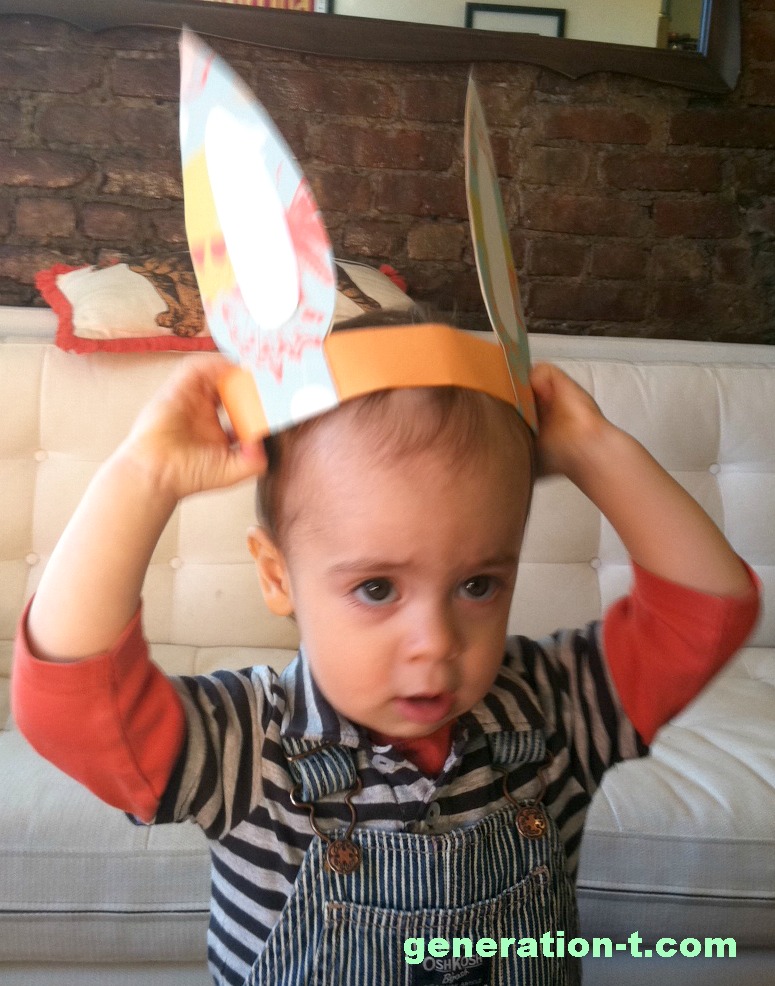
And here’s additional proof that these ears are for bunny-wannabes of all ages:

Happy Easter!

[ No Comments | Posted on March 29th, 2013 ]

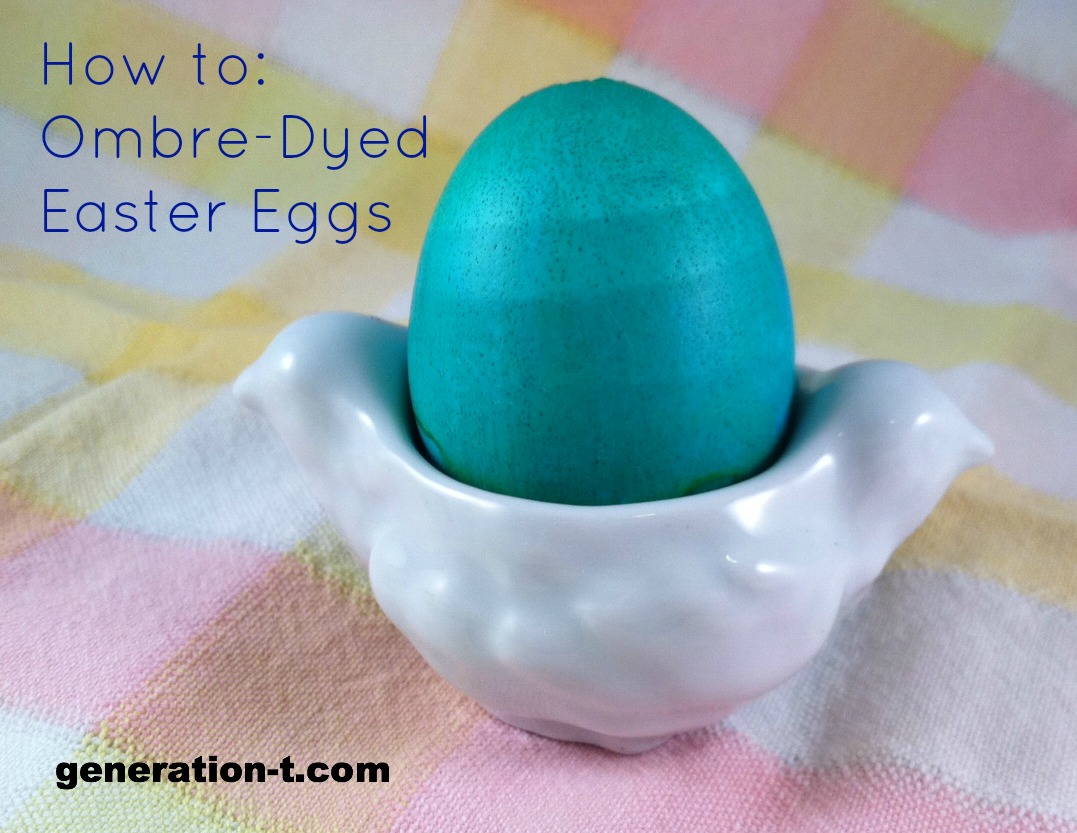
Easy Ombre Easter Eggs

Ombre skirts, ombre totes, ombre shoes, ombre nails, ombre hair, and don’t forget ombre T-shirts — ombre style is everywhere! Here’s Easter Egg DIY decorating #3 of the week: a clever tutorial for applying the trendy technique to your Easter eggs.

Materials:
-eggs (blown or hard-boiled)
-food coloring
-8 oz.clean, empty jam jars (or similar, for containing the dye)
-white vinegar
-warm water
-glass measuring cup
-measuring spoons
-skewers
-rubber bands or tape (to hold the skewer and egg in place in the jar)
-timer (kitchen or smartphone timer work well)

Make it:
1. Mix up your dye: Measure 3/4 cup of warm water. Add 1 1/2 teaspoons of white vinegar and about 20-25 drops of food coloring (in desired color).  Note: I mixed 3/4 cup of dye in order to cover an egg completely in an 8-ounce jar–if your containers are bigger, mix more dye at the same ratio.
2. Click below to follow along with the video tutorial I did for Ombre-Dyed Easter Eggs for About.com!


[ No Comments | Posted on March 28th, 2013 ]

Dye Easter Eggs with Shaving Cream

Okay, we kicked off a week of non-T-shirt-related posts with the Glitter Dot Easter Eggs yesterday, because as teased last week, I taped a bunch of how-to videos for About.com and since so many of them are Easter-themed, that’s what’s comin’ atcha! I’m definitely not the first person to use shaving cream and food coloring to dye my Easter eggs, but the amazing marbleized effect on the surface of the egg is so irresistible…

Materials:
-eggs (blown or hard-boiled)
-food coloring
-foaming shaving cream
-plastic spoon or knife
-bamboo skewer
-drying rack
-paper towels
-a timer (4-5 minutes)

Make it:
-Click below to follow along with the video tutorial for Marbleized Eggs with Shaving Cream for About.com.

Update: I heard from a commenter that you can do this technique with Cool Whip, too! Have you tried it?

[ No Comments | Posted on March 27th, 2013 ]

iLoveToCreate: Glitter Polka Dot Easter Eggs

I’m pretty traditional when it comes to decorating eggs at Easter time (dollar store egg dying kit, anyone?), but to be honest, it was getting kind of dull year after year. So this year, I dug through my craft stash to find a material that might have good crossover potential — one that was likely developed for one particular use (say, scrapbooking) that I could easily apply to something else (like Easter eggs). And voila!

Bring on the polka dots! Bring on the disco sparkle! The best part? No waiting around for dye to set or glue to dry. This is egg decorating with immediate (and rather shimmery) results.

For materials for the project and how to make these sparkle-riffic eggs, click below to watch the video tutorial I did for About.com and/or follow the step-by-step illustrated instructions (and a variation) at iLoveToCreate.com!

[ 2 Comments | Posted on March 26th, 2013 ]

How to: Make a Starter Embroidery Kit

As you may know, my niece became very enthusiastic about embroidery over the holidays, and now that another very important holiday is upon us (her 6th birthday, of course!), I decided to put together a personalized “my first embroidery kit” for her. It has a combination of store-bought and handmade elements, so you can make your shopping and DIY lists accordingly.

Here’s what I included:
-Tin box (or a basket, or a small tote bag)
-6 swatches of about 10″ by 10″ fabric (snipped from my own fabric stash — lots of geometric patterns for easy stitching)
-6 skeins of embroidery floss in different colors
-4″ wooden embroidery hoop
-Classic stork embroidery scissors and a felt sheath
-6 needles and a felt case
-Disappearing ink pen and a felt sleeve

To make the scissor sheath, trace about 1/4″ to 1/2″ around the scissors on a piece of felt (tip: use the disappearing ink pen before packaging it up!). The shape should be approximately 4 1/4″ by 2 1/4 at its longest and widest.

Cut four matching pieces of felt using the tracing as your guide. If you’re using printed felt (with a right and a wrong side), pair off the four pieces, wrong sides together.

Then sandwich all four pieces together and blanket stitch along the edge with a contrasting color embroidery floss. Starting about 3/4″ from the top, stitch around the bottom of the sheath (where the point of the scissors will rest) through all four layers, then stop again on the other side, 3/4″ from the top.

Without tying off the thread, stitch through only two layers at a time to finish the edges at the top of the sheath (where the scissors will be inserted).

Tie off and snip the thread, and insert the scissors! Here’s a diagram from my sketchbook as a refresher:

For the needle case, cut two 3″ by 5 1/2″ felt rectangles for the cover and one 2 1/2″ by 5″ rectangle for the inside page (1). Center the inside page on the right side of one of the larger rectangles and sew a straight running backstitch along the center to create the interior “spine” of the needle case (2). Then sandwich the second larger rectangle against the first, wrong sides together, and blanket stitch around the edges (3)! Arrange the needles onto the inside page (4), and fold the book closed (5).

For the disappearing ink pen sleeve/cozy, cut four pieces of 1 1/4″ by 6 3/4″ felt rectangles (1). Stack them together as you did the pieces of the scissor sheath and blanket stitch them the same way: through all four layers and then through just two layers at a time around the opening (2). Tie off the end, snip the thread, and insert the pen (3)!

Here’s a look at the finished felt DIY components.

Then it’s time to assemble everything. Make sure it looks nice and neat — because it’s likely the last time it’ll look that way!

What would you put in a first embroidery kit? I thought about some iron-on patterns, but for now I think she’s at the stage where she’s experimenting and doing her own thing (but I’ve got my eye on this one for future gifting!). I also thought about including a stitch card (there’s a tear-out one from this book and I was tempted to include the one from my copy).

[ 3 Comments | Posted on June 7th, 2012 ]

I Love to Create: Paper Flowers 4 Ways!

I’ve been playing with paper a lot lately over at my day job, so was inspired to dig into my own paper stash for this month’s iLoveToCreate project. With plenty of time until Mother’s Day, here’s a delicate flower that can be applied four different ways to create a non-wilting “bouquet” for her hand, her head, her hair, or her lapel.

Materials:
-Paper scrap for template (brown paper bag or a sheet from the printer paper recycling) at least 3″ x 3″
-Decorative paper scraps (card stock, book pages, paper bags, thick wrapping paper, etc., in variety of colors)
-All-purpose scissors
-Aleene’s Tacky Glue and clothespins OR Aleene’s Tacky Dot Rolls
-Pencil
-Ruler
-Ribbon of varying colors, widths, and lengths

Make It:
1. Fold the paper scrap in half three times to create a folded “wedge.” Cut a curved edge about 1 1/4″ from the point.

2. Unfold the template (it’ll look a little like a four-leaf clover), lay it flat and trace it three times on one or more of the decorative paper scraps. Three tracings makes one flower.

3. Cut around the tracings to make three identical blossoms. Snip two straight lines into the center of the first blossom, cutting out a wedge equal to two “petals.” Cut three petals from the second blossom, and four petals from the third blossom. Mark and then cut a 1/4″ semicircle from the center of each blossom, as shown.

4. Curve each of the blossoms to the cut edges overlap a bit. Adhere with glue or dots, let dry if necessary, then fold back the tips of the petals.

5. To make a flower ring, nest the blossoms inside one another. Select a piece of ribbon, wrap it around your finger, and knot the ends so the loop fits your finger. Gently thread the loop through the center of the flower, so the knot catches and rests in the center of the flower. Trim the ends of the ribbon as desired.

6. Slip the loop over your finger and the ring is complete!

7. Return to your paper stash and repeat the process to make more! You can personalize your bloom using crayons and card stock (a sweet way for younger kids to get involved if it’s a Mother’s Day gift), go for a more muted geometric design using pages from an Japanese puzzle magazine, gather up some vintage appeal by cutting into that newspaper-printed paper gift bag, or simply dig into the scrapbooking scraps for some playful color.

8. Keep your flowers uniform and muted…

…or mix and match the colorful blossoms in a paper botany experiment!

9. To make the headband, brooch, or barrette, thread one end of the ribbon through the flower, back to front, knot it, and then thread the end back through the flower, front to back. Thread multiples together this way, too! Wrap the ends of the ribbon around the headband, brooch, or barrette base and glue or knot to secure it.

And now, the million-dollar question for the author of Generation T: Can you make these flowers with T-shirts? Absolutely! Substitute fabric glue for the adhesive, and trim the neckline of a shirt with these sweet little blooms.

[ No Comments | Posted on April 24th, 2012 ]

iLoveToCreate: Upcycled Paperclip Necklace

Here’s to a colorful and elegant twist on that old office cube classic: the paperclip chain. I was inspired to make it after spying a similar necklace that my friend Rebecca was wearing in the office a couple of weeks ago. When she told me that she scored the amazingly simple accessory while on vacation in Cambodia earlier this year, that’s when I experienced the creative flash of an I-could-so-make-that moment: Seeing as I won’t be able to afford travel to Cambodia anytime soon (I wish!), I decided to set out on a far more affordable trip…to the local 99-cent store.

Materials:
-box of paperclips
-all-purpose scissors
-ruler
-woven plastic material (laundry bag from the dollar store, an Ikea shopping bag, all-purpose tarpaulin from the hardware store)*
-Aleene’s Jewel-It Embellishing Glue

Make it:
1. Link 38 to 48 paperclips in a chain. Hang the chain around your neck, see if you like the length, and add or subtract paperclips to your liking.

2. Measure and cut one 1 1/2″ by 1 1/4″ rectangle from the woven bag. Use that rectangle as a template to cut more rectangles. Cut as many rectangles as there are paperclips in your chain.

3. Select one rectangular piece. Fold the long sides in 1/4″ and crease. Then fold the piece in half lengthwise, crease it, and unfold. Fold the two short ends into the center line and crease again.

4. Refold the center crease, pinching the piece around the center of a paperclip in the chain to create a sort of “bead.”

5. Squeeze the glue generously along the open edge (the motion is sort of like mustard on a hotdog). Pin it in place with a spare paperclip to dry.

6. Repeat with the remaining rectangular pieces until every link on the paper chain is covered by a bead. Let the beads dry completely before removing the spare paperclips.

7. Remove the paperclips, touch up any finicky beads with an extra dab of glue, and repeat the entire process as many times as desired to create multiple colorful chains.

8. Drape them around your neck, and off you go.

Happy National Craft Month!

*Incidentally, these necklaces are made from the same sort of bags that Rami made his chic challenge-winning Project Runway All-Stars dollar store dress from, below! What a cool material to play with.

All photos by Megan Nicolay except for the Project Runway screenshot, via SheKnows.com.

[ 1 Comment | Posted on March 27th, 2012 ]

ILTC: Ryan Gosling’s Scorpion Jacket

Hey Girl.

As one popular Tumblr ode to Ryan Gosling says, he’s “your favorite sensitive movie dude-turned-meme.” Another Tumblr puts it more bluntly. And a recent video by Gosling doppelganger Joey shares “How to Look Like Ryan Gosling.” Which got me thinking about snagging Ryan Gosling’s style. Forget the hoodie and well-groomed 5 o’clock man-scruff. I mean, did you see that embroidered scorpion jacket he wore in Drive? If you didn’t, well, feast your eyes:

You can actually buy it — oh, but making it would be so much more fun. And so, for my newest iLoveToCreate blog post, I set out to make some sweet scorpion threads inspired by that original jacket — no satin quilting, no embroidery, just a white jacket from a thrift store and some fabric paint. And since my favorite new sensitive dude happens to be pint-sized, I’ve decided to make it in miniature for my little gosling. (Note: These instructions can produce a version for a full-sized goose as long as you start with a full-sized jacket!)

Materials:
-White
zip-front jacket or sweatshirt
-Pen
-Contact paper
-Craft knife and cutting mat
-Masking tape
-Yellow fabric paint, brush or spray on (for scorpion)
-Orange fabric paint, brush or spray on (for highlights)

-Black fabric paint, brush or spray on (for trim)
-Paint brushes (optional)
-Sewing machine threaded with white thread (optional)
-Scissors (optional)

Make it:

1. Lay the jacket flat and measure the approximate dimensions of the back panel. Cut a piece of contact paper to those dimensions. Draw or trace the outline of a scorpion onto the paper.

2. Use the craft knife and cutting mat to cut out the contact paper stencil.

3. Peel off the paper backing of the contact paper and press the stencil onto the back of the jacket.

4. Paint the entire scorpion shape with yellow paint. (Use spray paint or paint it on with a brush for more control.)
5. Paint some highlights on the scorpion in orange to show the shadows.

6. Line the bottom edge of the jacket, the sleeve ends, and the shoulder seams with masking tape and paint them black.

7. Let the paint dry completely and carefully peel off the tape and stencil. Optional: If the jacket has a hood (mine did), cut and hem it to create a collar (because I’m nerdy like that, and I’m going for authentic!).

8. Try the jacket on your littler driver. Okay, so he can’t even hold his head up yet, but he sure knows how to grip the wheel! Next up: Get him a driver’s license…in 16 years.

I love this stencil!! Now to apply it to a T-shirt…or what about painting a scorpion wrapping around the bottom of a pant leg or stockings?

Photo of Ryan Gosling via FirstShowing.

[ 7 Comments | Posted on February 28th, 2012 ]

Crafting with the Next Generation

After Thanksgiving dinner with my in-laws, we all settled into the living room for some Wii karaoke and Wii dance party, and I, in my 8-months-pregnant state, settled into an armchair to work on an embroidery project I was trying to finish before the little guy arrived. It wasn’t long after I sat down that my young niece snuggled in next to me and asked, “Aunt Megan, can I do what you’re doing?” Though I wasn’t quite ready to pass my project into the hands of a 5-year-old, I did have a spare needle, plenty of floss, and was more than happy to share my hoop. (I was also rather giddy that she had taken such an interest in what I was doing!) I suggested that we ask her grandfather whether he had a fabric scrap she could work on (he used to work in the interior decorating business and always seemed to have plenty of spare yardage), and sure enough he came back from the garage having clipped a corner of textured, shiny, sea foam green upholstery fabric for her to work on.
I helped her sandwich it in between the rings of the hoop, let her choose a color, and threaded the spare needle. And she started stitching…and stitching…and stitching! Long stitches and short stitches, cross stitches and straight stitches — only pausing for me to tie off an end and change the thread color under her creative direction. I asked her what she was making. “Oh! This is a mini-blanket for the baby. For him to snuggle with….” she replied. We talked about me helping her make a back to the mini-blanket and finishing the edges when she was ready.

Below, the young seamstress at work — she never once made the freshman mistake of stitching around the hoop, rather than just up and down through the fabric. (I was impressed. I don’t think I can say the same for my first embroidery experience!) The next morning, she declared herself finished with that piece of fabric, handed it off for me to take home to Brooklyn to finish, and started work on a black and white gingham pattern which allowed her to practice making short, even stitches by following the pattern on the fabric.

Fast forward to the day after Christmas — the little guy had arrived, and my niece was in New York to meet her new baby cousin. She asked if we could sew again. I reminded her that we needed to choose a back panel for the mini-blanket! So we sat down with my fabric stash in the Generation T workroom and flipped through scraps until she spotted the black and white flame fabric  — I had purchased it several years ago in Portland, Oregon (to make a quilted throw pillow for Mr. T — back before he was Mr. T) while I was on book tour for Generation T. I also used it as the backing fabric for the electric bass, so there’s definitely a theme! We cut a swatch, threaded a needle, and she began tracing the flames with embroidery floss.

When she left, I embroidered her initials on her work, pinned the pieces together and used some scrap muslin to edge the mini-blanket. I also added the loop, which yes I recognize makes it look a little like a potholder, but also allows me to tether it to the stroller!

And no complaints from this little guy about his new handmade mini-blankie! He loves to snuggle with it and grip the edges tightly.

I can’t wait until the next project my niece and I make together! And here’s to the next generation of DIYers — I can’t wait till this little guy is gripping some scissors in his little hands, too!

[ 7 Comments | Posted on January 30th, 2012 ]